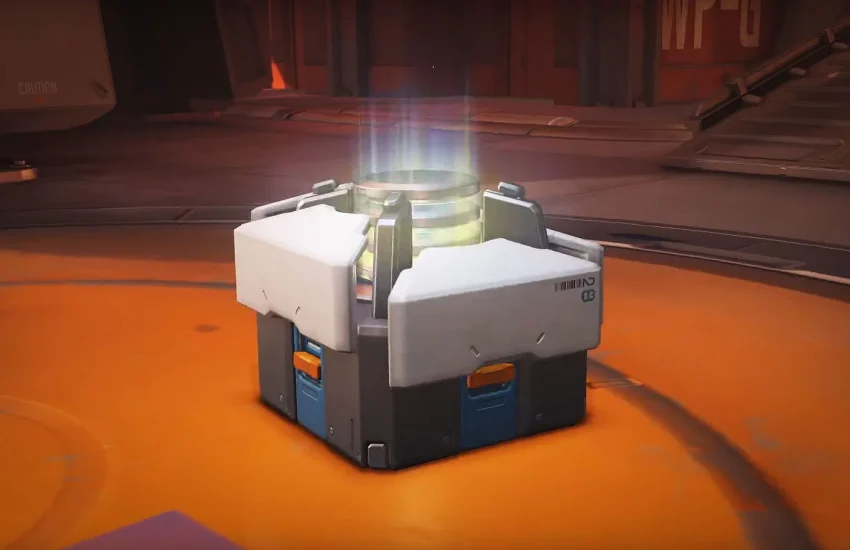
You know the feeling. That little flutter of anticipation as you hover over the “purchase” button for a loot box. Or the sudden, gut-punch thrill of a last-second skin bet on an esports match. These aren’t just random game features. They’re meticulously crafted psychological engines, designed to tap into the very core of how our brains work.
Let’s dive in. We’re going to peel back the curtain on the mechanics that keep players coming back—and spending. It’s a world where variable rewards, sunk cost fallacies, and near-misses aren’t bugs. They’re the main features.
The Allure of the Unknown: Why Loot Boxes Hook Us
At its heart, the psychology of loot box mechanics is a masterclass in operant conditioning. Remember Skinner’s pigeons? The principle is eerily similar. Instead of a predictable reward for a predictable action, you get a variable ratio schedule of reinforcement. You never know which pull will be the “big one.”
And that uncertainty is the hook. Our brains release more dopamine—the “wanting” chemical—in anticipation of a potential reward than in receiving the reward itself. The mystery crate, the shimmering chest, the unopened pack… they’re all dopamine delivery systems. The actual item inside? Often, it’s a bit of a letdown compared to the chase.
Key Psychological Triggers in Loot Box Design
- The Near-Miss Effect: Getting a “rare” item when you wanted the “legendary” one isn’t a loss. Psychologically, it’s framed as “almost winning.” It feels like progress, pushing you to try just one more time. The spinning wheel that lands right next to the grand prize? That’s not an accident.
- Sunk Cost Fallacy (“I’ve Come This Far…”): After opening twenty crates with no luck, you feel invested. Quitting now feels like wasting all that effort and money. So you buy just one more. And maybe another. The game has you.
- Fear of Missing Out (FOMO): Limited-time loot boxes with exclusive cosmetics create immense social pressure. If you don’t participate, you might miss a status symbol, a way to express yourself, or simply fit in with your peer group in-game.
Honestly, it’s a potent mix. The design leverages our innate desire for collection, our susceptibility to random rewards, and our social anxieties—all wrapped in a shiny, audiovisual package. The “ping” sound, the flash of light, the celebratory animation… they’re all sensory cues carefully tuned to make the experience feel rewarding, even when the outcome isn’t.
Raising the Stakes: The World of In-Game Betting
If loot boxes are a solo psychological dance, in-game betting—particularly around esports skins and real-money wagers—is a social and financial high-wire act. It takes the thrill of competition and layers on tangible risk and reward. Here, the psychology gets even more complex, blending gambling mechanics with fan culture.
You’re not just betting on a team; you’re betting on your own knowledge, your gut feeling, your loyalty. This creates a powerful illusion of control. “I’ve watched every match, I know their strategies, so my bet isn’t a gamble—it’s an informed decision.” That cognitive bias can make risky behavior feel perfectly rational.
| Psychological Principle | How It Manifests in In-Game Betting |
| Endowment Effect | You value the cosmetic skin in your inventory more than its market price. Betting it feels like betting “your” item, increasing the emotional stake. |
| Social Proof & Herding | Seeing crowd-sourced betting odds or what “everyone” is betting on can override your own judgment. You follow the pack. |
| Chasing Losses | After a loss, the urge to place a larger or riskier bet to recoup the deficit is a classic and dangerous gambling trap. |
And here’s the deal: for younger audiences especially, the line between gaming and gambling blurs. Using virtual items (“skins”) as currency can abstract the real-world value. You’re not losing $50; you’re losing a “Dragon Lore AWP.” That mental separation can lower the natural barriers to risky spending.
Where Lines Blur: The Regulatory Gray Zone
This is where the conversation gets thorny, and frankly, a bit messy. Governments and regulatory bodies worldwide are scrambling to catch up. Are loot boxes a fun game of chance or unregulated gambling? The answer depends heavily on whether the items have “real-world value.”
If you can cash out—through third-party marketplaces or game-facilitated trading—the psychological loop closes. The virtual item becomes a financial instrument. This has led to bans and restrictions in countries like Belgium and the Netherlands. Other regions are mandating disclosure of odds, a move that tries to inject transparency into a system built on mystery.
But disclosure alone isn’t a silver bullet. Knowing you have a 0.5% chance doesn’t necessarily stop the “but it could be me” impulse. In fact, for some, it might even heighten the challenge.
Playing With Awareness: A Path Forward
So, what’s the takeaway? Are these mechanics inherently predatory? Well, not always. But they are inherently powerful. The key, for both players and developers, is intentionality and awareness.
For players, it’s about recognizing the hooks. Ask yourself: Am I enjoying the game, or just the dopamine hits from the boxes? Am I betting for fun, or to escape a loss? Setting hard budgets—using real money, not “gem” counts—and time limits can create crucial friction.
For the industry, the call is for ethical design. Can you create exciting rewards without exploiting cognitive biases? Some games now offer direct purchase alongside random boxes. Others implement “pity timers,” guaranteeing a rare item after a set number of tries—this reduces the despair of true randomness while keeping the chase alive.
Ultimately, these systems are a part of our gaming landscape. They fund games, sure. But they also shape our experience of them. By understanding the deep psychology at play—the variable rewards, the social pressures, the illusion of control—we can navigate this space not as passive consumers, but as informed participants.
The most powerful item you can unlock isn’t in a loot box. It’s perspective.